
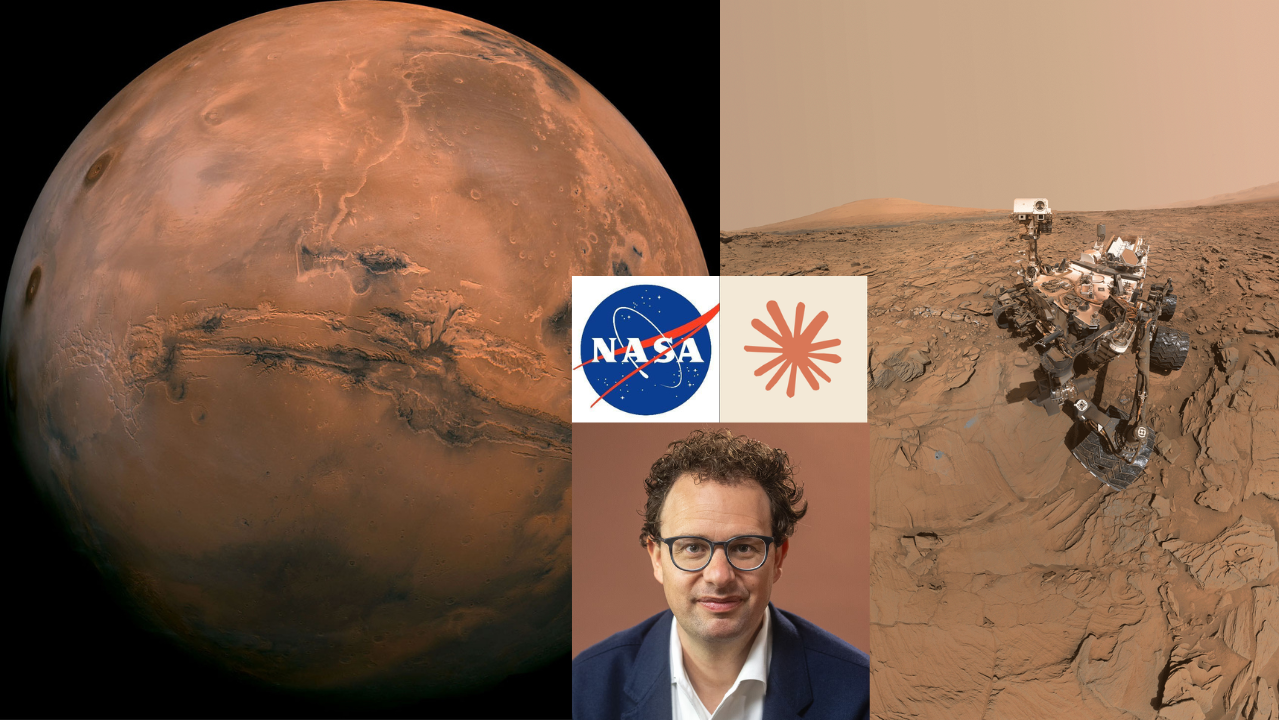
A New Kind of Intelligence Reaches Mars
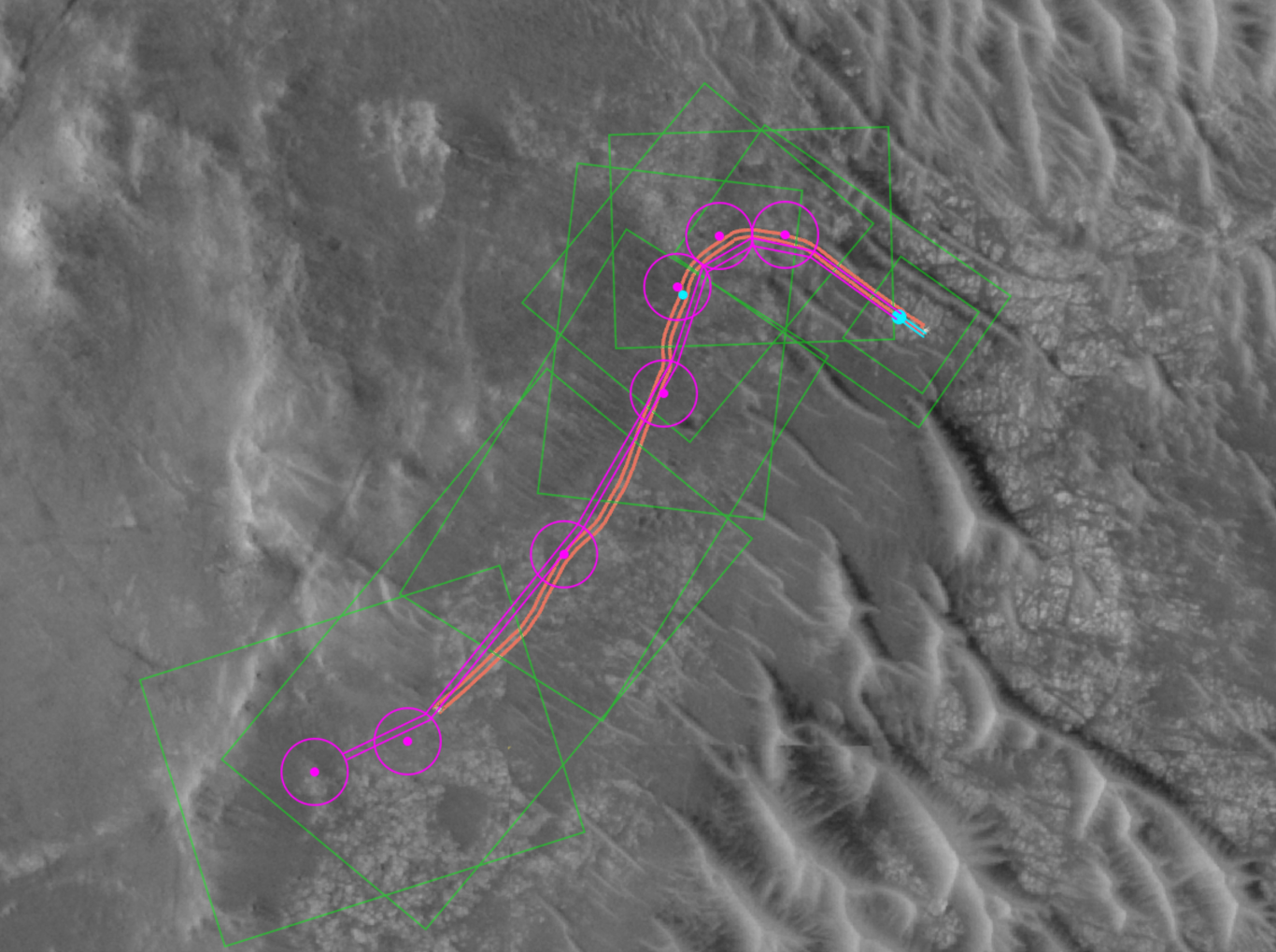
On a world where no human has ever walked, a six‑wheeled robot traced a path across ancient terrain its wheels pressing into dust untouched for billions of years. The Perseverance rover moved with its usual mechanical precision, but the route it followed was anything but ordinary. It was imagined, reasoned, and mapped by an artificial intelligence system millions of kilometers away.
NASA’s Jet Propulsion Laboratory (JPL) and Anthropic quietly achieved something extraordinary: they used a generative AI model to help plan rover navigation on Mars. It wasn’t a publicity stunt. It wasn’t a one‑off experiment. It was a glimpse into the future of planetary exploration.
This long‑form feature explores how AI became a partner in navigating another world and why this shift may redefine how humanity explores the solar system.
The Hidden Complexity of Driving on Mars
Driving a rover on Mars is one of the most demanding tasks in space exploration. There is no joystick, no real‑time steering, and no room for error. Every movement must be pre‑planned, simulated, and validated before it’s sent across millions of kilometers.
NASA/JPL-Caltech/UofA
Why rover navigation is so difficult
- Communication delays of up to 20 minutes each way
- Hazardous terrain filled with rocks, sand traps, and steep slopes
- Limited visibility from rover‑level cameras
- Energy constraints and solar charging cycles
- Risk of wheel damage or entrapment
- Strict safety protocols to protect billion‑dollar hardware
Human planners at JPL spend hours analyzing orbital maps, rover images, and terrain models to design even short drives. It’s slow, meticulous work and it limits how much ground a rover can cover each day.
This is the bottleneck NASA wanted to address.
Teaching an AI to Think Like a Rover Planner
Anthropic’s Claude wasn’t built for space exploration. It was built to understand language, reason about information, and generate structured plans. But JPL engineers saw an opportunity: what if a generative model could analyze terrain the way a human planner does?
The data NASA fed the AI
To prepare Claude for rover‑planning tasks, NASA provided:
- High‑resolution orbital imagery
- Rover navigation camera photos
- Digital elevation models
- Terrain hazard classifications
- Historical rover drive logs
- Mission‑specific safety rules
The goal wasn’t to let the AI “drive” the rover. Instead, it would propose a sequence of waypoints a breadcrumb trail the rover’s autonomous system could follow.
How the workflow actually worked
- Claude analyzed the terrain using mission data.
- It generated a safe, conservative route through hazards.
- Engineers validated the plan inside a digital twin simulation.
- Only then were the instructions sent to Mars.
The rover followed the AI‑generated path with the same caution and precision as a human‑planned drive.
A Quiet Revolution in Planetary Exploration
The significance of this milestone isn’t in the distance traveled it’s in the shift in capability.
AI didn’t replace humans. It amplified them.
Instead of spending hours tracing paths around rocks, engineers could focus on:
- Scientific strategy
- Instrument operations
- Long‑term mission goals
AI handled the tedious parts. Humans handled the mission.
AI didn’t take risks. It learned caution.
Claude’s routes were conservative, safe, and aligned with the instincts of experienced rover planners. It wasn’t improvising. It was reasoning.
AI didn’t act alone. It acted with oversight.
Every plan was checked, simulated, and approved by humans.
This wasn’t autonomy it was collaboration.
Why This Matters for the Future of Space Exploration
The implications stretch far beyond Mars.
1. Faster mission planning
AI can analyze terrain and generate route options far more quickly than manual workflows. This means:
- More ground covered
- More science collected
- More efficient use of mission time
2. Greater autonomy for deep‑space missions
Future missions to Europa, Titan, or Enceladus will face:
- Extreme communication delays
- Harsh, unpredictable terrain
- Limited contact windows
AI‑assisted planning allows spacecraft to adapt without waiting for Earth.
3. More efficient use of human expertise
Engineers can focus on high‑level decisions instead of routine hazard analysis.
4. A foundation for onboard AI
Today’s AI plans are generated on Earth.
Tomorrow’s could run directly on spacecraft.
This would allow rovers to:
- Reroute around unexpected obstacles
- Prioritize scientific targets
- Optimize energy usage
- Make real‑time decisions in hazardous terrain
A Partnership Across Worlds
What makes this moment compelling isn’t the technology alone it’s the collaboration.
Humans defined the mission.
AI proposed a path.
Humans validated it.
The rover carried it out.
It’s a dance between human intuition and machine reasoning, played out across millions of kilometers.
And it hints at a future where exploration becomes more ambitious, more autonomous, and more deeply intertwined with intelligent systems.
The Dawn of AI‑Assisted Exploration
Someday, a rover may descend into the icy cracks of Europa, navigate the methane dunes of Titan, or traverse the shadowed craters of the Moon’s south pole. When it does, it may rely on an AI partner to help it survive.
The first steps toward that future happened quietly, inside Jezero Crater, when a rover followed a path imagined by an artificial mind.
It was a small drive.
But it was a giant shift in how we explore the unknown.
FAQ: NASA, Anthropic, and AI‑Driven Planetary Exploration
How is NASA using AI in planetary exploration
NASA uses artificial intelligence to support rover navigation, terrain analysis, hazard detection, and mission planning. AI systems help generate safe driving routes, analyze scientific targets, and reduce the workload on human mission teams, allowing rovers to explore more efficiently.
What role does Anthropic’s Claude play in Mars rover navigation
Anthropic’s Claude AI analyzes orbital imagery, rover photos, and terrain hazard data to propose safe waypoints for rover movement. NASA engineers then validate these AI‑generated routes in simulations before sending them to the rover on Mars, ensuring safety and mission reliability.
Why is AI important for future space missions
AI enables faster decision‑making, reduces planning time, and supports autonomy in environments where communication delays make real‑time control impossible. This is essential for missions to distant worlds like Europa, Titan, and Enceladus, where spacecraft must adapt quickly to unpredictable terrain.
Does AI replace human mission planners at NASA
No. AI assists human planners by handling repetitive tasks such as hazard analysis and route generation. Humans still validate all plans, make strategic decisions, and oversee mission safety. AI acts as a partner, not a replacement.
Will future Mars rovers use onboard AI
NASA is exploring the possibility of lightweight onboard AI systems that allow rovers to make real‑time navigation decisions, reroute around obstacles, and optimize energy usage without waiting for instructions from Earth. This could dramatically increase rover autonomy and scientific productivity.